Products
Click here to view more Products
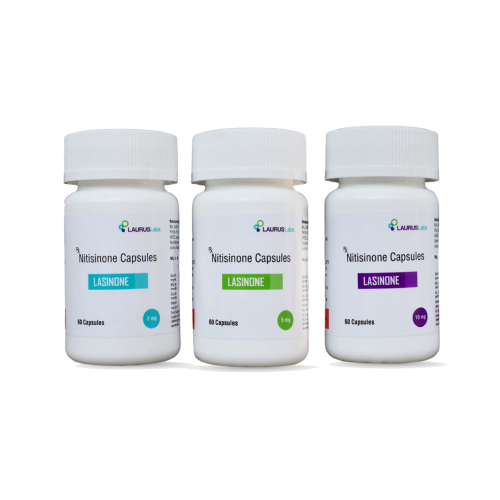
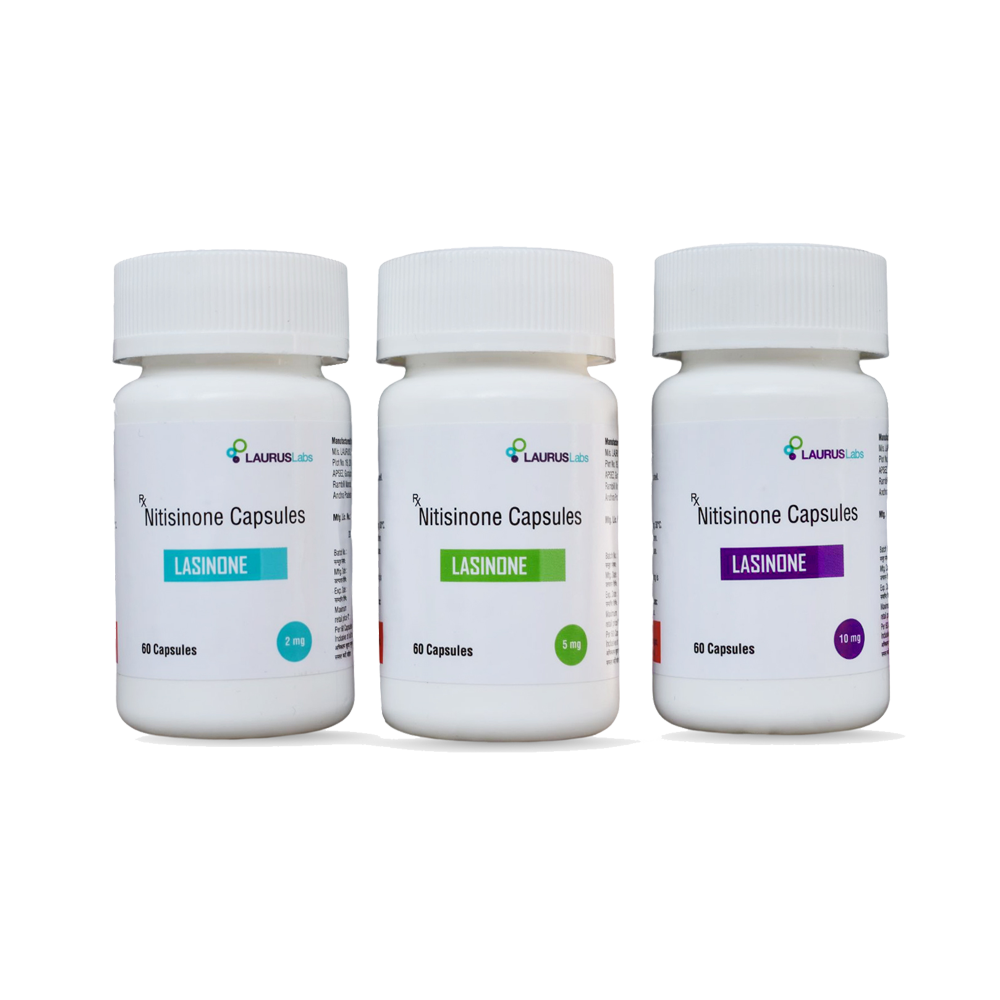
Lasinone is an enzyme inhibitor used to treat rare inherited metabolic disorders, specifically hereditary tyrosinemia type-1 — a rare disorder that occurs due to abnormal accumulation of tyrosine, a protein. It is indicated for the treatment of adult and pediatric patients with hereditary tyrosinemia type 1 (HT-1) in combination with dietary restriction of tyrosine and phenylalanine.
Hereditary tyrosinemia is a rare disorder in which there is abnormal build-up of an amino acid called tyrosine in various organs like liver, kidney, or the nervous system. The signs and symptoms may include eye pain and redness, excessively watery eyes, abnormal light sensitivity (photophobia), or thick, painful skin on the palms and soles. Without proper treatment, this can lead to severe liver disease, liver failure, liver cancer, kidney problems, and death.
Hereditary tyrosinemia type 1 (HT-1) is a rare, inherited metabolic disorder caused by a deficiency in the enzyme fumarylacetoacetate hydrolase (FAH), leading to a build-up of the amino acid tyrosine and its toxic by-products. This condition primarily affects the liver and kidneys, and if untreated, can lead to severe liver disease, liver failure, liver cancer, kidney problems, and death.
The disease is clinically heterogeneous. Symptoms may start during the first few months (acute type), in the second half of the first year (subacute type) or in the following years up to adulthood (chronic type).
Liver synthetic functions are usually severely affected with coagulopathy and hypoalbuminemia. Elevated levels of succinylacetone (SA) in dried blood spots, plasma or urine are pathognomonic. Other abnormalities include elevated α-fetoprotein, increased plasma levels of tyrosine, phenylalanine and methionine, increased urinary δ-ALA excretion and features of Fanconi tubulopathy. Confirmation of diagnosis is usually by mutation analysis. Newborn screening programs include testing for tyrosinemia type 1 (SA is the recommended marker).
Nitisinone works by blocking the enzyme 4-hydroxyphenylpyruvate dioxygenase (HPPD), which blocks the second step in the tyrosine catabolic pathway. This action stops the accumulation of toxic intermediate metabolites, such as succinylacetone, that cause severe liver and kidney damage in Hereditary Tyrosinemia Type 1 (HT-1).
Absorption: Following a single oral administration of nitisinone 30 mg in fasting patients, Cmax was 10.5 μmol/L and Tmax was 3.5 hrs. A multi-dose regimen of nitisinone 80 mg once daily achieved a Cmax of 120 μmol/L and a Tmax of 4 hrs. Steady-state was reached within 14 days of dosing.
Distribution: In vitro studies have demonstrated that nitisinone exhibits human plasma protein binding of >95% at 50 μm.
Metabolism: The mean terminal plasma half-life was 54 hours in healthy males receiving single-dose nitisinone. In vitro studies demonstrated that nitisinone is relatively stable in human liver microsomes, with minor metabolism possibly mediated by the CYP3A4 enzyme.
Elimination: The mechanism of NTBC elimination is poorly understood. Studies involving multiple oral doses of 80 mg daily in healthy subjects showed that the mean fraction of the dose excreted as unchanged nitisinone in the urine was 3.0%, suggesting that renal elimination of nitisinone is of minor importance.
Nitisinone (NTBC) was first approved by the U.S. FDA in 2002 for the treatment of HT-1. It has orphan drug designation. The drug is also approved by the European Medicines Agency (EMA) and has received regulatory approval in India as Lasinone (nitisinone) by Laurus Rare Diseases.
Jean Larochelle et al. Effect of nitisinone (NTBC) treatment on the clinical course of hepatorenal tyrosinemia in Québec. Mol Genet Metab. 2012 Sep;107(1-2):49-54. | Ute Spiekerkoetter et al. Long-term safety and outcomes in hereditary tyrosinaemia type 1 with nitisinone treatment: a 15-year non-interventional, multicentre study. Lancet Diabetes Endocrinol 2021; 9: 427–35. | Anibh Martin Das et al. Clinical utility of nitisinone for the treatment of hereditary tyrosinemia type-1 (HT-1). The Application of Clinical Genetics 2017:10 43–48.
Starting Dose: The recommended starting dosage is 0.5 mg/kg (actual body weight) administered orally twice daily.
Maintenance Dose: The recommended maintenance dosage in patients 5 years of age and older who have undetectable serum and urine succinylacetone concentrations after a minimum of 4 weeks on a stable dosage, is 1 to 2 mg/kg once daily.
Dose should be increased if succinylacetone is detectable after four weeks. Adjustments may be needed based on body weight gain.
HT-1 requires lifelong treatment. As soon as the diagnosis is confirmed (or even highly suspected), start Lasinone orally along with emergency treatment for acute liver failure if necessary. A protein-restricted diet must also be started in parallel. Patients should be referred to a specialist centre for long-term management.
Lasinone is an enzyme inhibitor used to treat rare inherited metabolic disorders, specifically hereditary tyrosinemia type-1 — a rare disorder that occurs due to abnormal accumulation of tyrosine, a protein. It is indicated for the treatment of adult and pediatric patients with hereditary tyrosinemia type 1 (HT-1) in combination with dietary restriction of tyrosine and phenylalanine.
Lasinone works by inhibiting the enzyme 4-hydroxyphenylpyruvate dioxygenase (HPPD), which blocks the second step in the tyrosine catabolic pathway. This action stops the accumulation of toxic intermediate metabolites, such as succinylacetone, that cause severe liver and kidney damage in Hereditary Tyrosinemia Type 1 (HT-1).
Lasinone begins working very quickly to inhibit the toxic metabolic pathway involved in hereditary tyrosinemia type 1. While the toxic succinylacetone levels are suppressed almost immediately, it can take longer for other markers to return to normal. For example, the median time for plasma succinylacetone levels to normalize was about 3.9 months in clinical studies.
The most common side effects of Nitisinone are elevated levels of tyrosine, reduced platelet count, decreased lymphocyte count, conjunctivitis (eye inflammation), corneal opacity (clouding of the cornea), photophobia (sensitivity to light), eye irritation (keratopathy), eyelid inflammation, cataract (clouding of the eye's lens), reduced granulocyte count, itching.
While Lasinone can be taken with other medications, it interacts with many drugs and requires strict medical supervision. You should tell your doctor and pharmacist about all prescription, over-the-counter, and herbal medications you are taking, as your doctor may need to adjust the dosages or monitor you closely for side effects.
For information on coverage and affordability support for Lasinone in India, contact Laurus Rare Diseases at 7337585050. Government rare disease programs and insurance schemes such as CGHS may cover treatment costs for eligible patients.
No, you should not stop taking nitisinone even if you feel better. HT-1 is a permanent genetic disorder requiring continuous treatment. Stopping can lead to serious complications like acute liver failure or neurological crises. Consult your doctor before making any changes.
Limited available data with nitisinone use in pregnant women are not sufficient to determine a drug-associated risk of adverse developmental outcomes. Breastfeeding: there are no data on the presence of nitisinone in human milk, the effects on the breastfed infant, or the effects on milk production. Consult your physician before use.

Disclaimer

 Healthcare Professional