Products
Click here to view more Products
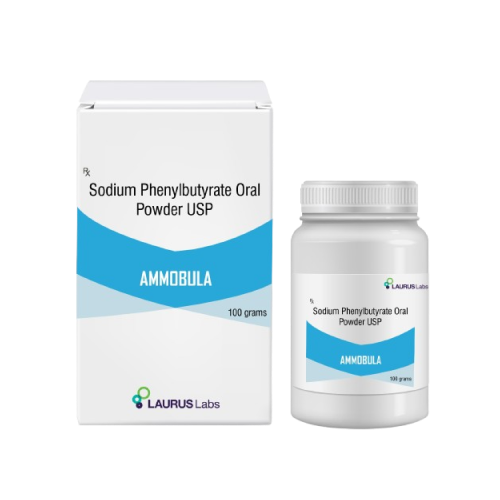
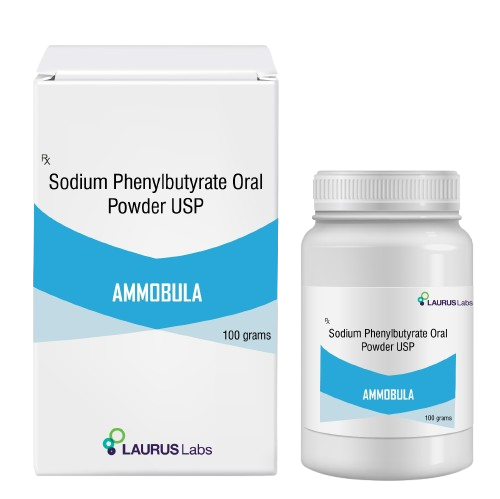
Ammobula contains sodium phenylbutyrate, a prescription nitrogen scavenger used to help manage hyperammonemia (elevated blood ammonia) in patients with urea cycle disorders (UCDs). It supports ammonia control by providing an alternative pathway for removing excess nitrogen from the body when the normal urea cycle is impaired.
Laurus Ammobula refers to Ammobula® from Laurus Labs: an oral powder formulation of sodium phenylbutyrate used as part of long-term UCD management under specialist supervision. On this page, “Ammobula,” “Laurus Ammobula,” and “sodium phenylbutyrate” are used to describe the same therapy approach (active ingredient + branded product) in the context of urea cycle disorders and hyperammonemia risk reduction.
Urea cycle disorders are rare genetic conditions that affect the body's ability to remove ammonia, a toxic byproduct of protein breakdown. Without proper treatment, elevated ammonia levels can cause serious neurological damage and life-threatening complications.
The urea cycle is a series of biochemical reactions that occur primarily in the liver, converting toxic ammonia into urea, which can be safely eliminated through urine. Urea cycle disorders occur when one of the enzymes in this pathway is deficient or absent due to genetic mutations.
Symptoms can range from mild to severe and may include lethargy, vomiting, confusion, behavioral changes, seizures, and in severe cases, coma. Infants with severe UCDs may present with poor feeding, vomiting, and rapid deterioration within days of birth.
Ammobula contains sodium phenylbutyrate, which works as a nitrogen scavenger through the following mechanism:
Each molecule of phenylacetylglutamine contains two nitrogen molecules, making this an efficient route for nitrogen disposal when the urea cycle is compromised.
Ammobula (Sodium Phenylbutyrate Oral Powder USP) is an FDA-approved prescription medication for the management of urea cycle disorders (UCDs) in patients who cannot be managed by dietary protein restriction and amino acid supplementation alone. It is approved for use across all age groups — from neonates to adults — and is classified as FDA Pregnancy Category C. The medication has been used for over two decades in the management of these rare metabolic disorders.
A retrospective study evaluated nine patients with OTC (ornithine transcarbamylase) deficiency treated with sodium phenylbutyrate at a median dose of 352 mg/kg/day, with a median follow-up of 26 months. Median plasma ammonia levels were maintained at 30 μmol/L and median glutamine levels at 902 μmol/L during the treatment period.
During the 26-month follow-up period, there were no hyperammonemic episodes requiring hospitalization. Total protein intake was increased to 0.95 g/kg/day after 18 months of therapy, indicating improved metabolic tolerance and better quality of life.
No adverse effects related to therapy were observed during the treatment period. Neurological status in patients was mostly stable, with some mild deficits (e.g., ataxia, hyperactivity, speech delay). Liver and renal function remained normal throughout therapy. The study confirmed that sodium phenylbutyrate use in OTC-deficient patients is safe, facilitates clinical management, and enhances quality of life by achieving better metabolic control despite higher natural protein intake.
Ammobula is a prescription medication that must only be initiated and monitored by a metabolic specialist or physician experienced in the management of urea cycle disorders. Dosing is individualized based on body weight and body surface area. For full prescribing information, contact Laurus Rare Diseases at 7337585050 or visit www.laurusrarediseases.com/ammobula.html
Most side effects are dose-related and may improve with dosage adjustment or administration with food. In clinical studies, no adverse effects were detected during the treatment period, with liver and renal function remaining normal throughout therapy.
Plasma levels of ammonia, arginine, branched-chain amino acids, and serum proteins should be maintained within normal limits, and plasma glutamine should be maintained at levels less than 1,000 μmol/L. Serum drug levels of phenylbutyrate and its metabolites, phenylacetate and phenylacetylglutamine, should be monitored periodically.
Ammobula is indicated as adjunctive therapy in the chronic management of patients with urea cycle disorders involving deficiencies of carbamylphosphate synthetase (CPS), ornithine transcarbamylase (OTC), or argininosuccinic acid synthetase (AS). It is indicated in all patients with neonatal-onset deficiency (complete enzymatic deficiency, presenting within the first 28 days of life). It is also indicated in patients with late-onset disease (partial enzymatic deficiency, presenting after the first month of life) who have a history of hyperammonemic encephalopathy. It is important that the diagnosis be made early and treatment initiated immediately to improve survival. Any episode of acute hyperammonemia should be treated as a life-threatening emergency.
Sodium phenylbutyrate is the active ingredient; Ammobula® is a branded oral powder formulation that contains sodium phenylbutyrate. In clinical practice, both terms are often used together because patients search by brand name (“Ammobula”) and clinicians reference the generic name (“sodium phenylbutyrate”).
For urea cycle disorders (UCDs), sodium phenylbutyrate functions as a nitrogen scavenger to help reduce the risk of hyperammonemia by supporting alternative nitrogen disposal pathways. Product selection and dosing should be individualized and supervised by a metabolic specialist.
Yes. Sodium phenylbutyrate (Ammobula®) is used in pediatric patients with urea cycle disorders, including infants and children, when prescribed and monitored by a clinician experienced in UCD management.
Dosing is typically individualized by body weight or body surface area and is commonly given in divided doses with meals or feeds. Because illness, fasting, surgery, or stress can increase ammonia risk, families should follow the patient’s emergency plan and monitoring schedule from their care team.
A suspected hyperammonemic crisis is a medical emergency. If symptoms such as unusual sleepiness, vomiting, confusion, behavior changes, poor feeding, loss of coordination, or seizures occur, seek emergency care immediately.
Emergency teams typically focus on rapidly lowering ammonia and preventing neurologic injury, while also identifying triggers such as infection, dehydration, or excess protein intake. Patients and caregivers should keep an emergency protocol letter available and share the UCD diagnosis promptly on arrival.
Ammobula and Laurus Ammobula refer to the same product from Laurus Labs. People often add “Laurus” to clarify the manufacturer/brand source when searching online, but it is not a different medicine.
Both terms refer to an oral powder formulation of sodium phenylbutyrate, used as a nitrogen scavenger in the long-term management of urea cycle disorders to help reduce the risk of hyperammonemia. Always follow your prescriber’s dosing and monitoring instructions.
No. Ammobula® (sodium phenylbutyrate) does not cure urea cycle disorders (UCDs). It is used as part of chronic management to help control ammonia by supporting alternative nitrogen disposal.
UCD care often includes dietary management, essential amino acid supplementation (as directed), routine laboratory monitoring, and a written emergency plan for illness-related decompensation. Some patients may be evaluated for liver transplantation depending on disease severity and clinical course.
Discuss all medications and supplements with your clinician before starting sodium phenylbutyrate (Ammobula®). Some drugs can affect ammonia risk, metabolism, appetite, or overall nutritional status, which matters in urea cycle disorder management.
Do not stop, start, or adjust doses on your own—especially during illness or stress—because changes can increase the risk of hyperammonemia. Your metabolic specialist can advise on safe combinations, monitoring, and what to do if side effects occur.
For more information about Ammobula or to discuss whether this medication is right for you, consult with your healthcare provider or metabolic specialist. Always read the complete prescribing information before starting any new medication.
This information is for educational purposes only and does not replace professional medical advice. Ammobula is a prescription medication that should only be used under medical supervision.

Disclaimer

 Healthcare Professional