Diseases
Click here to view more Diseases
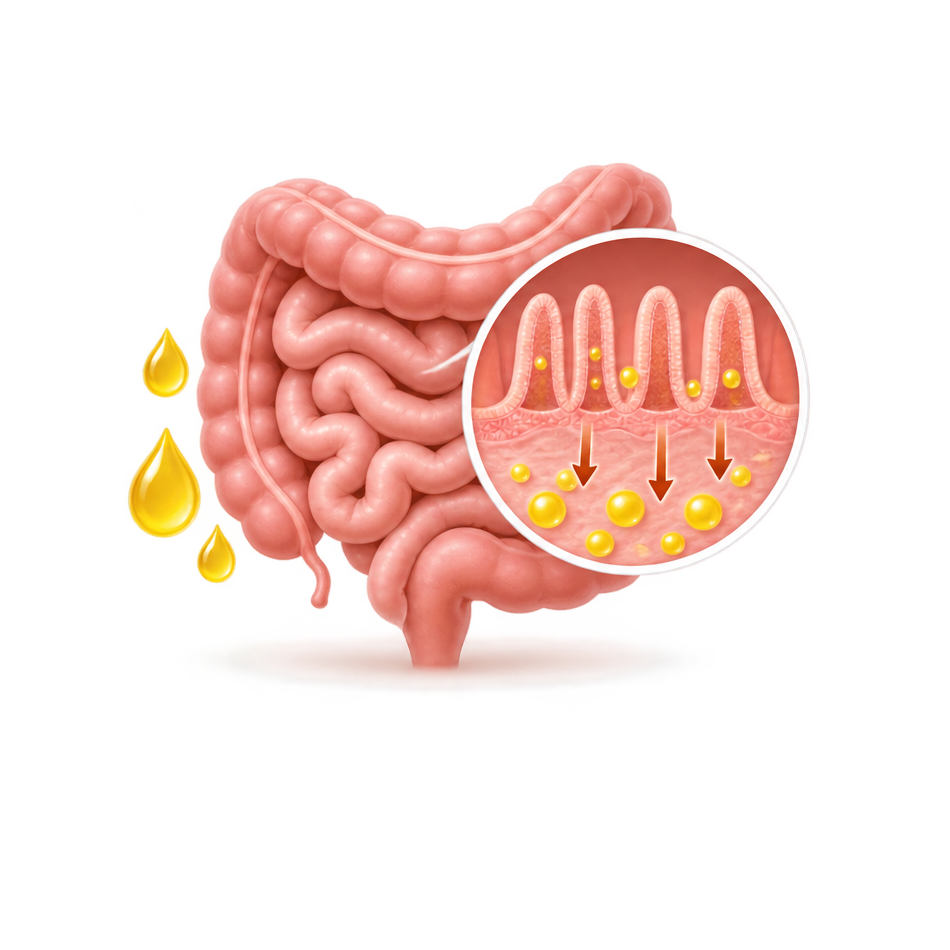
Fat malabsorption occurs when the digestive system is unable to properly digest or absorb fats from food. Since dietary fat provides energy and helps the body absorb certain vitamins, persistent problems with fat absorption can affect overall nutrition and health.
Normally, digestion of dietary fat involves several organs working together. Bile produced by the liver and released into the intestine helps prepare dietary fats for digestion, while pancreatic enzymes break fats into smaller components that can be absorbed through the small intestine.
When any part of this process is affected, some of the dietary fat may remain unabsorbed and pass through the digestive tract. Depending on the underlying cause and severity, this can lead to digestive symptoms, weight loss and deficiencies of important nutrients

The absorption of dietary fat involves a coordinated digestive process.
Enzymes, particularly pancreatic lipase, break down dietary triglycerides into smaller components that can be processed by the intestine.
Bile salts released into the small intestine help disperse dietary fat and facilitate its digestion and absorption.
The products of fat digestion combine with bile salts to form microscopic structures called micelles. These help transport fat-soluble substances, including Vitamins A, D, E and K, toward the intestinal surface.
The nutrients enter intestinal cells and are subsequently incorporated into lipoprotein particles called chylomicrons. These transport through the lymphatic system and ultimately enter the circulation. When this process disrupted, absorption of dietary fat and fat-soluble vitamins reduced.
Dietary fats have two important functions: they provide energy and help the body absorb fat-soluble vitamins A, D, E and K. When fat digestion or absorption is impaired for a prolonged period, the absorption of these vitamins may also be reduced. The likelihood and severity of vitamin deficiency depend on the underlying condition, its duration and the degree of malabsorption.
Table: Fat-Soluble Vitamins and their Importance
| Vitamin | Important functions | Possible effects of deficiency |
|---|---|---|
| Vitamin A | Supports normal vision, immune function and maintenance of epithelial tissues | Poor night vision, dry eyes and impaired immune function |
| Vitamin D | Helps maintain calcium and phosphate balance and supports bone health | Rickets in children, osteomalacia, bone discomfort and muscle weakness |
| Vitamin E | Acts as a lipid-soluble antioxidant and helps protect cells from oxidative damage | Neurological abnormalities and, in severe deficiency, hemolytic anemia |
| Vitamin K | Required for activation of several proteins involved in normal blood coagulation | Easy bruising, prolonged clotting time and increased bleeding tendency |
Fat malabsorption happens when your digestive system cannot properly break down, mix, or absorb the fats you eat. For your body to absorb fat, it requires a coordinated process involving bile from the liver, enzymes from the pancreas, and a healthy small intestinal lining.
If any part of this system is disrupt, fat passes completely undigested into the colon, causing symptoms like greasy stools, bloating, and weight loss.
The main causes of fat malabsorption are group by the specific digestive organ or process that is failing:
Bile acts like a natural dish soap, breaking large fat drops into tiny bubbles so your body can digest them. If bile cannot reach your food, fats cannot be absorbed.
The pancreas creates lipase, a crucial chemical scissor that chops fat molecules into pieces tiny enough to pass through your intestinal wall.
Even if fat is perfectly broken down by bile and enzymes, the small intestine must be healthy enough to absorb it.
The symptoms can vary depending on how much fat is not being absorbed.
Stools may become greasy, bulky, pale or difficult to flush and may have a particularly strong odor because of increased fat content.
Poor absorption of fat and other nutrients can reduce the amount of energy and nutrients available to the body, potentially resulting in unintended weight loss.
The investigations selected depend on the suspected cause and the patient's age, symptoms and nutritional status.
The evaluation may include:
Blood investigations do not themselves diagnose fat malabsorption, but they can identify nutritional consequences and help investigate the underlying condition.
Depending on the clinical situation, testing may include:
Breath tests may be use in selected situations to investigate conditions such as carbohydrate malabsorption or small intestinal bacterial overgrowth.
Specialized tests, including 13C-labelled mixed-triglyceride breath testing, may also be used in some settings to assess fat digestion and absorption.
Imaging studies such as abdominal ultrasound, CT or MRI may help identify pancreatic, hepatobiliary or intestinal abnormalities. Endoscopic procedures may be recommend when a condition affecting the intestinal lining suspected. Tissue samples obtained during endoscopy can help evaluate disorders such as celiac disease or inflammatory bowel disease.
When required, specialized tests may be use to assess pancreatic function, bile-related disorders or other specific causes of malabsorption. The choice of investigations should be individualize by the treating healthcare professional.
Treatment depends primarily on the underlying cause and the degree of nutritional impairment.
For people with exocrine pancreatic insufficiency, pancreatic enzyme replacement therapy (PERT) can help improve digestion of dietary fat and other nutrients.
Enzymes should be taken exactly as prescribed, generally with meals and snacks according to the prescribed regimen.
Long-standing malabsorption can result in deficiencies of Vitamins A, D, E and K as well as other nutrients.
Dietary needs vary considerably depending on the underlying condition. A restrictive diet should not be start without professional guidance, particularly in infants and growing children.
Fat malabsorption occurs when the digestive system cannot adequately digest or absorb dietary fat. The condition can result from problems involving the pancreas, liver, bile ducts or small intestine. When fat absorption is significantly reduce, the body may also have difficulty obtaining adequate amounts of fat-soluble Vitamins A, D, E and K.
Children may develop:
Diagnosis usually involves a combination of clinical assessment and appropriate investigations. Depending on the suspected cause, a healthcare professional may recommend stool testing, blood tests, imaging, endoscopy or specialized functional tests.
Yes. Management is possible in many cases, but treatment depends on the underlying cause. Treatment may involve management of the primary disease, pancreatic enzyme replacement when indicated, dietary and nutritional support, and correction of identified vitamin or mineral deficiencies. Some causes may be reversible, while others require long-term management.
There is no single answer because fat malabsorption can result from many different conditions. If the underlying cause is temporary and can be successfully treat, normal fat absorption may improve. When malabsorption is, relate to a chronic condition, long-term nutritional and medical management may be required.
Fat malabsorption itself is not usually consider an inherited disorder. However, certain inherited conditions can cause pancreatic, intestinal or metabolic abnormalities that result in malabsorption. Examples include cystic fibrosis and some inherited disorders affecting pancreatic or intestinal function.
Yes. Children have additional nutritional requirements because they are growing and developing. Significant or prolonged malabsorption can therefore affect growth, bone development and overall nutritional status. Adults may more commonly present with symptoms such as weight loss, nutritional deficiencies, muscle loss or reduced bone health. Early assessment and appropriate nutritional management are particularly important in growing children.
Persistent and significant fat malabsorption can contribute:
Treatment is individualize and may include:
Disclaimer: The information provided about Fat Malabsorption is intend for general educational and informational purposes only. It should not be consider medical advice or used as a substitute for consultation with a qualified healthcare professional. This content is not intend for self-diagnosis or treatment. If you notice ongoing, severe, or unusual symptoms related to Fat Malabsorption, it is important to seek guidance from a licensed medical professional for proper diagnosis and care.

Disclaimer

 Caregiver /
Patient